
How to Clean Solar Panels Without Damaging Them
If you want to clean solar panels without damaging them, the safest approach is to use the right equipment, the right amount of water, and a method designed for solar glass. Solar panels are not something that should be scrubbed with harsh tools, cleaned with strong chemicals, or treated like standard windows.
In Southern California, solar panels are regularly exposed to dust, windblown dirt, pollen, traffic film, bird droppings, and other environmental buildup. For both residential and commercial systems, the goal is not just to remove visible dirt. It is to clean the glass safely, thoroughly, and without creating scratches, seal damage, or other unnecessary risk.
If you are comparing service options, you can also review our residential solar panel cleaning and commercial solar panel cleaning services.
Why Cleaning Method Matters
Solar panels have a durable surface, but that does not mean they should be cleaned aggressively. Poor cleaning methods can create avoidable problems, including scratched glass, damaged frame edges, unnecessary pressure on the modules, and residue left behind on the panel surface.
That is why the best cleaning method focuses on controlled agitation, solar-safe equipment, and a process matched to the system type. The right method for a one-story residential roof is not always the same as the right method for a large commercial rooftop, carport, or ground-mounted array.
What Not to Use on Solar Panels
A lot of panel damage risk comes from using the wrong tools. Solar panels should not be cleaned with abrasive brushes, stiff bristles, scouring pads, razor tools, or harsh chemical cleaners. These can mark the glass, leave residue, or create unnecessary wear on the system over time.
Homeowners and facility managers should also be cautious about treating solar panels like ordinary exterior glass. A quick rinse, a household cleaning product, or an off-the-shelf scrub brush may seem harmless, but it is not the standard you want on a solar array.
The Best Way to Clean Solar Panels Safely
The best way to clean solar panels without damaging them is to use a professional method that combines purified or managed water, soft solar-safe brushes, and controlled contact across the glass surface.
A proper cleaning process typically includes:
- Evaluating the level and type of buildup
- Choosing equipment suited to the array layout and access conditions
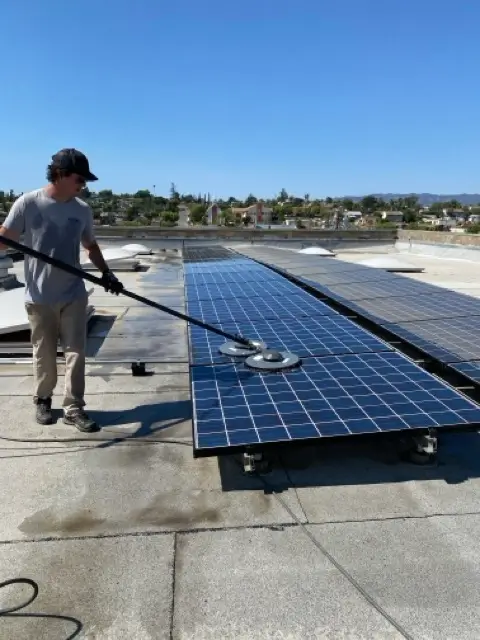
- Using soft rotating brush systems or other solar-safe tools designed for panel cleaning
- Avoiding abrasive contact and unnecessary pressure
- Rinsing contaminants away with appropriate water quality and flow
- Working in a way that protects the modules, frames, and surrounding system area
This matters even more on larger commercial systems, where the layout, access, and volume of panels require a repeatable process rather than an improvised one.
For larger properties, proper planning matters just as much as the cleaning itself. You can learn more about our approach to commercial solar cleaning and large-site service coordination.
Southern California Conditions Make Method Even More Important
In Southern California, panel soiling can vary widely by location. Inland properties may deal with more dust, agricultural residue, and dry windblown buildup. Coastal properties may also face airborne residue and environmental film from marine conditions.
That means the cleaning method has to match the site. Some systems need regular maintenance cleaning. Others need a heavier initial cleaning because buildup has been left too long. In both cases, the objective stays the same: remove contamination without causing damage.
Residential Solar Panel Cleaning
For residential systems, safe cleaning usually comes down to two things: proper roof access and proper equipment. A homeowner may be tempted to use a hose, extension pole, or general-purpose brush, but that can lead to poor results or unnecessary risk.
Professional residential solar panel cleaning is typically the better option when:
- The array is on a pitched roof
- Buildup includes bird droppings or stuck-on debris
- The homeowner cannot safely access the panels
- The system has not been cleaned in a long time
- The owner wants the work done with equipment meant for solar glass
For homes in Southern California, regular cleaning can make sense where panels are exposed to dust, nearby roads, landscaping activity, pollen, or coastal air.
See our residential solar panel cleaning service for more information about how this is handled on home solar systems.
Commercial Solar Panel Cleaning
For commercial properties, the best cleaning method needs to be consistent and scalable. Large rooftop arrays, carports, and ground-mounted systems require more than a basic wash approach. They need equipment that can handle the size of the site while still being appropriate for the panels themselves.
Commercial solar cleaning should account for:
- System size and configuration
- Roof or site access
- Staging and water logistics
- Repeatable cleaning quality across the array
- Minimizing disruption to the property or operations
This is where professional equipment matters most. The difference between a true solar cleaning contractor and a general exterior cleaning approach is often the equipment, process, and understanding of how to clean PV glass properly.
For larger systems, visit our commercial solar panel cleaning page to review service considerations for rooftops, carports, and ground-mounted arrays.
Why Equipment Matters
Not all solar panel cleaning methods are equal. Equipment selection directly affects both cleaning quality and panel safety. Soft rotating brush systems designed for solar applications are generally a better fit than improvised tools because they are built for controlled contact and repeatable results.
For commercial and utility-scale systems especially, professional solar cleaning equipment allows crews to clean efficiently without relying on abrasive methods or excessive pressure. On residential systems, the same principle applies. The wrong tool can create risk. The right tool helps protect the asset.
If you want to understand the difference between basic washing and true solar-specific service, our commercial cleaning and residential cleaning pages provide additional context.
When Professional Cleaning Makes Sense
If the goal is to get panels clean without damaging them, professional cleaning is often the safest choice. That is especially true when the system is hard to access, heavily soiled, or large enough that cleaning quality and consistency matter across many modules.
A professional service should understand:
- How to access the system safely
- How to identify the right cleaning approach for the site
- How to use solar-safe brushes and water methods
- How to avoid unnecessary risk to the panels and surrounding components
Conclusion
The best way to clean solar panels without damaging them is to use a method designed specifically for solar equipment. That means avoiding abrasive tools, avoiding harsh chemicals, and using the right combination of water, brush technology, and site-specific planning.
For residential and commercial solar systems in Southern California, the right cleaning process is not just about making the panels look better. It is about removing buildup carefully and protecting the system while the work is being done.
If you need residential or commercial solar panel cleaning in Southern California, The Solar Cleaners provides professional service using solar-safe equipment and methods designed for the type of system being cleaned.
Related Services: Residential Solar Panel Cleaning | Commercial Solar Panel Cleaning | Contact The Solar Cleaners