
What Is Growing on My Solar Panels?
Green, white, gray, or crusty-looking spots on solar panels may be algae, lichen, moss, coastal residue, bird droppings, or hardened environmental buildup. In coastal areas like San Diego, Del Mar, Solana Beach, Encinitas, Oceanside, and surrounding communities, moisture, marine air, pollen, dust, and shade can create conditions where buildup becomes more than cosmetic.
Solar panel cleaning is not always about making panels look better. In some cases, it is about safely removing material that can block sunlight, hold moisture, spread across the glass, or become more difficult to remove over time.
Algae, Lichen, and Coastal Buildup Explained
If something appears to be growing on your solar panels, it is usually one of several common types of buildup. The exact cause depends on the roof environment, coastal exposure, shade, moisture, nearby trees, birds, and how long the material has been sitting on the glass.
Common examples include:
- Algae: Often appears as green or dark organic growth, especially where moisture and shade are present.
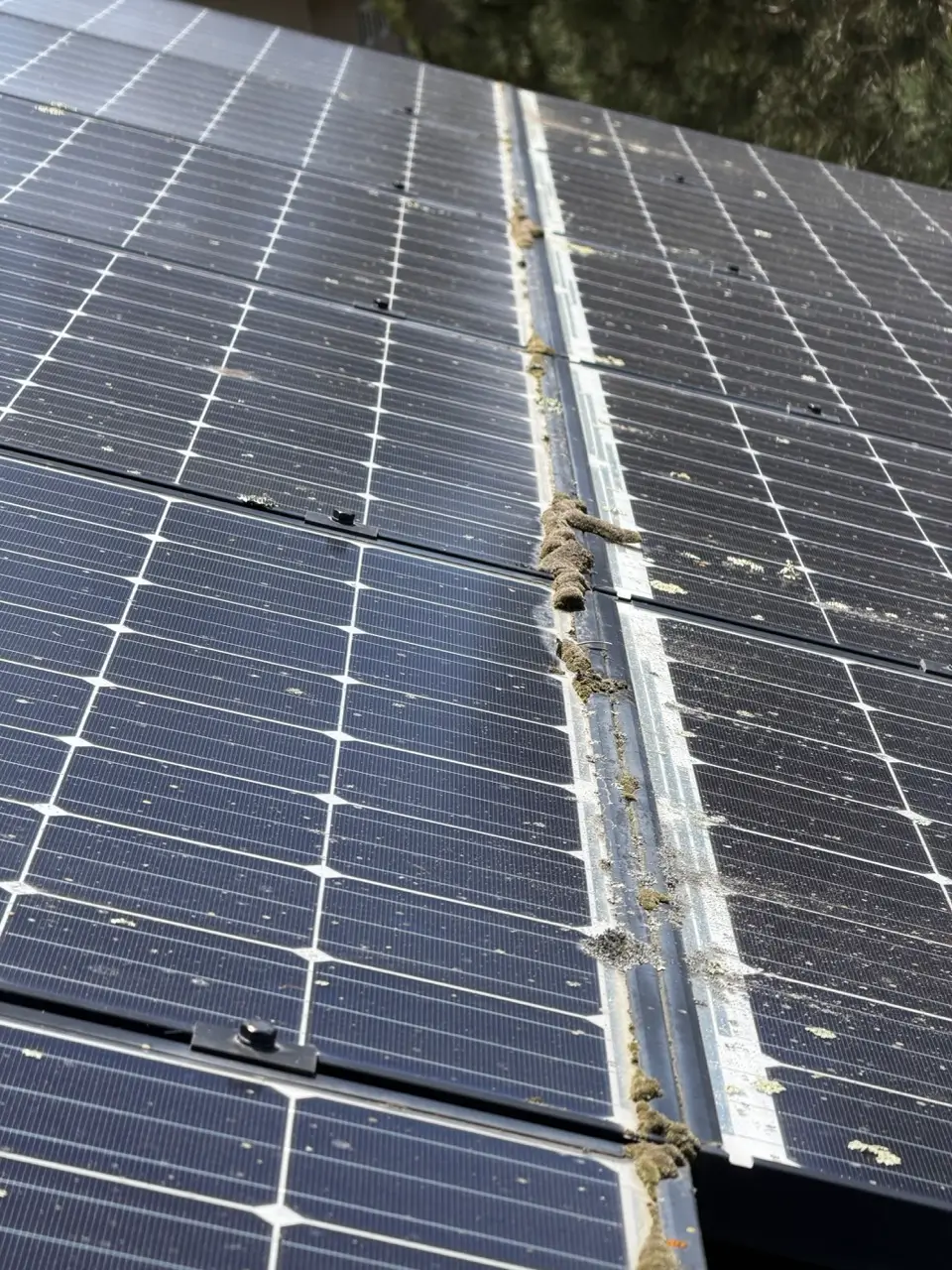
- Lichen: Usually appears as crusty, circular, gray, white, green, or yellowish patches attached to the glass surface.
- Moss: Less common directly on solar panels, but possible near edges, frames, roof debris, or shaded roof areas.
- Coastal buildup: Salt mist, marine film, sand, and moisture-related residue common near the coast.
- Bird droppings: Heavy spots that can harden and become difficult to remove if ignored.
- Dust and pollen: Common throughout Southern California and often made worse during dry periods.
In many cases, homeowners notice the issue after seeing small spots that do not rinse away with rain. That is usually a sign that the buildup has bonded more firmly to the panel surface.
Why Algae and Lichen Can Appear on Solar Panels
Algae and lichen are more likely to show up when moisture, shade, and airborne organic material are present. Coastal areas, tree-covered neighborhoods, north-facing roof sections, and panels near valleys or canyons can all create better conditions for organic buildup.
In San Diego County, solar panels can collect a mix of marine layer moisture, salt residue, dust, pollen, ash, and organic debris. When that material sits long enough, it may create a surface where algae or lichen can begin to develop.
This is one reason solar panels can look different from one roof to another. Two homes in the same neighborhood may have very different buildup depending on roof pitch, sun exposure, tree cover, irrigation overspray, bird activity, and how often the system is cleaned.
Algae vs. Lichen on Solar Panels
Algae and lichen are not the same. Understanding the difference matters because the cleaning approach may be different.
Algae on Solar Panels
Algae is usually softer than lichen and may appear as green, dark, or slimy-looking growth. It is often found where panels stay damp longer, especially in shaded areas or coastal locations where marine layer moisture is common.
Algae may be easier to remove than lichen, but it still requires care. The goal is to remove the growth without using harsh chemicals, aggressive scraping, or methods that could damage the solar module glass, seals, frame, or wiring.
Lichen on Solar Panels
Lichen is typically more difficult to remove because it can attach firmly to the panel surface. It often appears as crusty, round, raised, or spotted patches. Unlike loose dust, lichen may not come off with a standard rinse.
Removing lichen from solar panels requires patience, the right tools, and a controlled process. Aggressive scraping, abrasive pads, or improper chemicals can create unnecessary risk. This is one of the situations where a professional solar panel cleaning service should be considered.
Why Coastal Solar Panels Get Buildup Faster
Coastal solar panels often deal with more than ordinary dirt. Near the ocean, panels can collect salt mist, marine film, sand, moisture, and fine airborne residue. This type of buildup may not always look heavy at first, but it can leave a layer across the glass that does not fully wash away with light rain.
In areas like Del Mar, Solana Beach, Cardiff, Encinitas, Oceanside, Carlsbad, La Jolla, and other coastal communities, the marine layer can help buildup stay damp longer. When dust, pollen, and organic material mix with moisture, the buildup may become more persistent.
That does not mean every coastal system needs constant cleaning. It does mean coastal panels should be inspected regularly, especially when visible spotting, film, bird droppings, algae, or lichen begin to show.
Is This Just Cosmetic Dirt or Meaningful Buildup?
Not all dirt on solar panels creates the same concern. A light layer of dust may be mostly cosmetic, especially if it is loose and evenly spread. Meaningful buildup is different. It can include stuck-on material, biological growth, heavy bird droppings, sap, paint overspray, hard water spotting, or residue that remains after rain.
Meaningful buildup may need professional attention when it:
- Creates visible spots or patches across the solar glass.
- Does not rinse away with rain.
- Appears raised, crusty, sticky, or hardened.
- Is concentrated on certain panels or cells.
- Continues spreading over time.
- Comes from algae, lichen, moss, bird droppings, paint, sap, or heavy coastal residue.
The important point is that solar panel cleaning should be based on site conditions, not just appearance. A system may look only slightly dirty from the ground while still having buildup that matters on the glass surface.
Can Rain Remove Algae, Lichen, or Coastal Buildup?
Rain may help rinse loose dust from solar panels, but it usually does not remove algae, lichen, bird droppings, hardened residue, or coastal film completely. In Southern California, rain is often too limited and inconsistent to be considered a reliable cleaning method.
Rain can also leave residue behind. When moisture dries on the panel surface, it may combine with dust, pollen, salt, and other contaminants. Over time, that can create a layer that remains even after the panels look cleaner from a distance.
If the material is bonded to the glass, rain alone is usually not enough.
Why You Should Be Careful Cleaning Growth Off Solar Panels
Solar panels should not be treated like regular windows, roof tiles, or patio glass. They are electrical components exposed to weather, heat, roof conditions, and system wiring. Cleaning them incorrectly can create safety risks and may damage the system.
Homeowners should avoid:
- Using pressure washers directly on the panels.
- Scraping with razor blades, metal tools, or abrasive pads.
- Using harsh chemicals or household cleaners.
- Walking on panels.
- Cleaning hot panels in direct midday sun.
- Attempting roof work without proper access and safety planning.
When algae or lichen is present, the cleaning process may take more care than a standard maintenance wash. That is because the material may be attached to the surface and may require a more controlled removal process.
How Professional Solar Panel Cleaning Handles Organic Growth
At The Solar Cleaners, we approach algae, lichen, and coastal buildup as a site-specific cleaning problem. The right process depends on the system type, roof access, contamination level, panel layout, age of the buildup, and whether the material is loose, bonded, organic, or mineral-based.
A professional cleaning approach may include:
- Inspecting the panels before cleaning.
- Identifying whether the buildup appears to be algae, lichen, bird droppings, coastal film, or another contaminant.
- Using solar-safe cleaning equipment matched to the system.
- Using specialized filtered water when appropriate.
- Using professional rotating-brush equipment where the site allows.
- Taking care around frames, wiring, roof surfaces, and panel edges.
- Documenting visible before-and-after conditions when needed.
For many residential systems, a professional rotating-brush method provides a more controlled clean than a simple water-fed pole rinse. On commercial, carport, ground-mounted, and larger systems, the equipment selection may change based on access, slope, row spacing, and project conditions.
You can learn more about our residential service here: residential solar panel cleaning.
Why Water-Fed Pole Cleaning May Not Be Enough
A water-fed pole can be useful in some situations, but it may not be enough for stuck-on algae, lichen, or heavy coastal buildup. The issue is not just water. It is contact, control, pressure, brush movement, access, and the type of contamination on the glass.
Loose dust may respond to a rinse and light brushing. Bonded lichen, hardened bird droppings, sap, or coastal residue may require a more deliberate process. That is why the cleaning equipment matters.
For professional solar panel cleaning, the method should match the condition of the system. A lightly dusty rooftop system does not require the same approach as a coastal system with organic growth or heavy stuck-on contamination.
When Should a Homeowner Call a Professional?
A homeowner should call a professional when the buildup appears stuck, raised, organic, widespread, or difficult to identify. This is especially important when the panels are on a steep roof, high roof, tile roof, or hard-to-access section of the home.
Professional solar panel cleaning is worth considering when you see:
- Green or dark growth on the panels.
- Crusty white, gray, yellow, or green spots.
- Bird droppings that have hardened.
- Coastal film that does not rinse away.
- Heavy dust, pollen, ash, or agricultural residue.
- Panels that look unevenly dirty from one section to another.
- Buildup returning quickly after rain.
If you are not sure what is on the panels, photos can help. The Solar Cleaners can review visible conditions and recommend whether a standard cleaning or a more specialized removal process may be needed.
Residential and Commercial Solar Panel Cleaning
Algae, lichen, and coastal buildup are not limited to homes. Commercial rooftops, carports, schools, industrial buildings, and ground-mounted systems can also collect organic and environmental contamination.
The cleaning method depends heavily on the system design. Residential rooftops may require careful roof access and hand-controlled equipment. Commercial systems may require lift access, scheduling coordination, water planning, and equipment suited to larger arrays.
The Solar Cleaners provides:
- Residential solar panel cleaning
- Commercial solar panel cleaning
- Utility-scale and larger solar cleaning support
- Professional solar panel cleaning services
What Homeowners Should Know Before Trying to Clean It Themselves
Before attempting to clean algae, lichen, or buildup from solar panels, homeowners should consider three things: safety, equipment, and the type of material on the glass.
Roof access can be more dangerous than the cleaning itself. Tile roofs, steep pitches, wet surfaces, and awkward array placement can create unnecessary risk. Even when the panels look easy to reach, working around electrical equipment on a roof should be handled carefully.
The second issue is equipment. A soft brush and water may remove loose dirt, but they may not remove bonded material. On the other hand, overly aggressive tools can damage the surface or surrounding components.
The third issue is identification. Algae, lichen, mineral deposits, sap, paint overspray, and bird droppings may look similar from the ground but require different levels of care.
How to Help Prevent Growth and Heavy Buildup
You may not be able to prevent all buildup on solar panels, especially near the coast or under trees. However, regular inspection and maintenance can help keep small issues from becoming harder to remove.
Helpful steps include:
- Look at your panels from the ground every few months.
- Watch for green, gray, white, or crusty spots.
- Check panels after long dry periods, marine layer exposure, or heavy pollen.
- Trim nearby branches when appropriate and safe.
- Do not allow irrigation overspray to hit the panels.
- Schedule professional cleaning when buildup is visible and not rinsing away.
For homes near the coast, shaded areas, trees, or frequent bird activity, cleaning frequency may need to be adjusted based on real conditions rather than a fixed schedule.
Frequently Asked Questions About Growth on Solar Panels
What is the green stuff on my solar panels?
Green material on solar panels may be algae, moss, pollen buildup, or organic residue mixed with moisture and dust. If it does not rinse away with rain, it may need professional cleaning.
Can lichen grow on solar panels?
Yes, lichen can appear on solar panels in the right conditions, especially where moisture, shade, and organic material are present. Lichen can attach firmly to the glass and may be harder to remove than loose dirt.
Will rain clean algae or lichen off solar panels?
Rain may rinse loose dust, but it usually does not remove algae, lichen, hardened bird droppings, or coastal buildup. Bonded material typically requires a controlled cleaning process.
Is it safe to scrape lichen off solar panels?
No. Scraping solar panels with metal tools, razor blades, or abrasive pads can create unnecessary risk. Lichen removal should be handled carefully with solar-safe tools and methods.
Who should I call to remove algae or lichen from solar panels?
You should contact a professional solar panel cleaning company that understands solar-safe cleaning methods, roof access, and the difference between standard dirt and bonded buildup. The Solar Cleaners provides professional solar panel cleaning for residential and commercial systems in Southern California.
Final Takeaway
If you see green, white, gray, or crusty growth on your solar panels, do not assume it is just normal dirt. It may be algae, lichen, coastal buildup, bird droppings, or another contaminant that requires a more careful cleaning process.
The safest next step is to identify the buildup and choose a cleaning method that matches the condition of the system. For homeowners in San Diego County and surrounding Southern California communities, contact The Solar Cleaners for professional solar panel cleaning and guidance.
Need Help Identifying Buildup on Your Solar Panels?
If you see algae, lichen, coastal film, bird droppings, or stuck-on buildup, The Solar Cleaners can help evaluate the condition and recommend the proper cleaning approach.
Request Solar Panel Cleaning