
Does Rain Clean My Solar Panels?
Rain can help rinse some loose dust from solar panels, but it usually does not fully clean them. For homeowners in San Diego, rain may improve the appearance of the glass for a short time, but it often leaves behind grime, residue, bird droppings, pollen, and other buildup that still needs proper cleaning. In most cases, rain is not a complete maintenance solution.
What Rain Actually Removes
Rain can wash away light surface dust when the panels are only mildly dirty. A decent rainfall may leave the glass looking cleaner than it did before, especially after a dry stretch with loose dust sitting on the surface.
That said, rain usually only helps with material that has not bonded to the glass.
Rain may remove:
- Loose dust
- Light surface debris
- Fresh dirt that has not built up for long
This is why some homeowners assume the rain has done the job. The panels may look better from the ground, but that does not mean they are truly clean.
What Rain Usually Leaves Behind
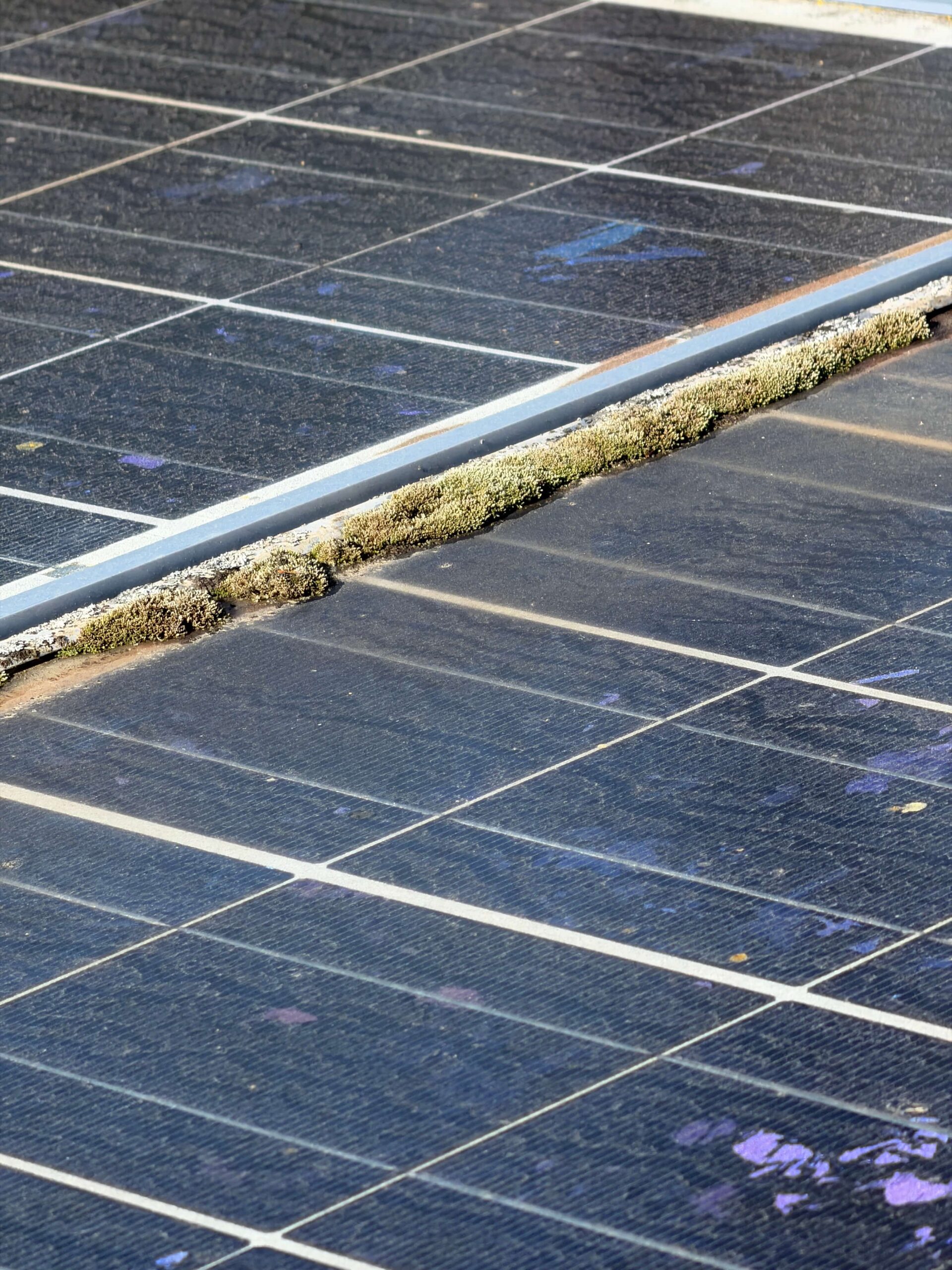
Solar panels often collect more than loose dust. In residential settings, the glass can develop a film from pollen, bird droppings, landscaping debris, traffic residue, coastal air, and general grime. Rain does not reliably remove that kind of buildup.
Rain often leaves behind:
- Bird droppings
- Sticky pollen
- Dirt film
- Water spotting
- Debris near panel edges
- Buildup in lower corners of the array
In some cases, light rain can actually make the panels look streaked or patchy once they dry. That is especially true when dirt has already been sitting on the glass for a while.
Why This Matters in San Diego
San Diego properties often go through long dry periods, and that gives dust, pollen, and grime time to accumulate on solar panels. Depending on the area, homeowners may also deal with coastal residue, nearby landscaping, bird activity, and traffic film.
That matters because occasional rain is not the same as a thorough cleaning. A brief storm may rinse the surface, but it usually does not provide the kind of controlled cleaning needed to remove stuck-on buildup.
For San Diego homeowners, this is a practical issue. Panels may appear cleaner after rain, but once the glass dries, haze, spotting, and residue often remain visible.
How to Tell When Rain Is Not Enough
The easiest time to check your panels is after the rain has stopped and the glass has dried. If the panels still look dull, streaked, or visibly dirty, the rain did not fully clean them.
Common signs include:
- Bird droppings still visible after rainfall
- Dust lines near the bottom edge of the panels
- Hazy or uneven-looking glass
- Dirty corners or frame-edge buildup
- Panels that still look soiled from the ground
If you can still clearly see buildup after the rain, it is still there.
When Professional Solar Panel Cleaning Makes Sense
Professional cleaning makes sense when rain is no longer enough to keep the panels visibly clear. That often happens after long dry periods, during pollen season, or when bird droppings and grime remain on the glass after rainfall.
Homeowners often schedule cleaning when:
- Panels still look dirty after rain
- The system has gone a long time without service
- There is visible buildup on the glass
- Bird droppings are stuck to the panel surface
- Roof access makes DIY cleaning risky
Professional cleaning is also worth considering when the homeowner wants the work done safely and with equipment intended for solar panel surfaces.
Why Equipment Matters
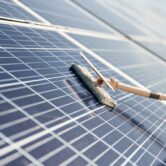
The method matters. Solar panels should not be treated like regular windows or sprayed off with whatever tool happens to be available. Proper cleaning depends on using solar-safe equipment and the right level of agitation on the glass.
A rotating brush system is different from a basic water-fed pole. Rotating brush equipment provides more consistent contact across the panel surface, which is important when dirt film, pollen, and stuck-on residue are present. A water-fed pole may be useful for lighter rinsing, but it is generally more limited when buildup is heavier or more stubborn.
In simple terms:
- Rotating brush systems are better suited for more thorough professional cleaning
- Water-fed poles can be more limited on stuck-on buildup
- Proper technique matters just as much as the equipment used
For residential systems, the goal is careful, professional cleaning of the PV glass without using methods that are too aggressive or poorly suited to solar panels.
Residential vs. Commercial Cleaning Differences
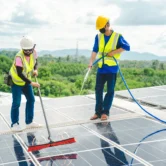
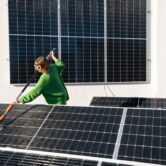
Residential solar panel cleaning is different from commercial and utility-scale cleaning. On homes, the work is usually more focused on roof access, safety, layout, and targeted cleaning of smaller arrays.
Residential service typically involves:
- Roof-mounted panel access
- More limited working space
- Greater focus on home safety and property care
- Cleaning methods suited to smaller systems
Commercial and utility-scale cleaning often involves different access equipment, larger workflows, and more extensive site logistics. The underlying principle is the same, but the scale and execution are different.
Rain can help rinse loose dust from solar panels, but it usually does not fully clean them. For many San Diego homeowners, rain leaves behind film, spotting, pollen, and stuck-on debris that still require proper cleaning. When panels remain visibly dirty after rainfall, professional solar panel cleaning is often the better solution.