Why Solar Panel Cleaning Equipment Matters
Solar panel cleaning equipment affects cleaning quality, safety, efficiency, and professionalism. Not all solar panel cleaning tools perform the same. Not all methods fit residential, commercial, carport, and utility-scale solar systems equally well.
Property owners, facility managers, EPCs, asset managers, and contractors should understand the difference between a water fed pole, a rotating brush system, and a robotic solar panel cleaning system. The equipment often reveals the quality of the service.
At The Solar Cleaners, we treat solar panel cleaning as a maintenance service, not a cosmetic rinse. We choose equipment based on buildup, access conditions, array layout, and project scale.
Common Types of Solar Panel Cleaning Equipment
Three tools appear often in solar panel cleaning: water fed poles, rotating brush systems, and remote-controlled robotic cleaning systems. Each tool serves a different role. They do not offer the same cleaning capability or production level.
The right solar panel cleaning equipment depends on the site, the amount of buildup, the system size, and the access conditions. It also depends on whether the work involves residential solar panel cleaning, commercial solar panel cleaning, carport cleaning, or utility-scale solar panel cleaning.
Water Fed Poles for Solar Panel Cleaning
Water fed poles, often called WFPs, originally cleaned windows. Many new operators use them for solar panel cleaning because they cost less and are easy to buy. That low barrier to entry is one reason the market has filled with providers using equipment that was not built for professional solar module cleaning.
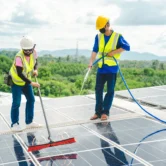
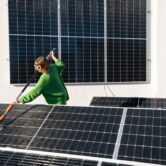
A water fed pole can work on a small, simple project with straightforward access. A limited residential array with around a dozen panels is one example. Its limits become obvious as the pole extends.
Once extended, a water fed pole loses meaningful downward pressure. The operator then has less ability to agitate the glass and remove adhered dirt, pollen film, bird droppings, or stubborn residue. Water flow can also become an issue depending on hose length, pump strength, and the overall setup.
This is where the difference between rinsing and actual solar panel cleaning becomes clear. A water fed pole may remove loose dust. It often struggles with buildup that needs real agitation. For that reason, it should not define the professional standard for solar panel cleaning.
Water fed poles still have a place in limited situations. They can help in difficult spots that are hard to reach with heavier equipment. Even then, the work must be done safely, and the tool should be treated as a situational option rather than a primary method.
Rotating Brush Systems for Solar Panel Cleaning
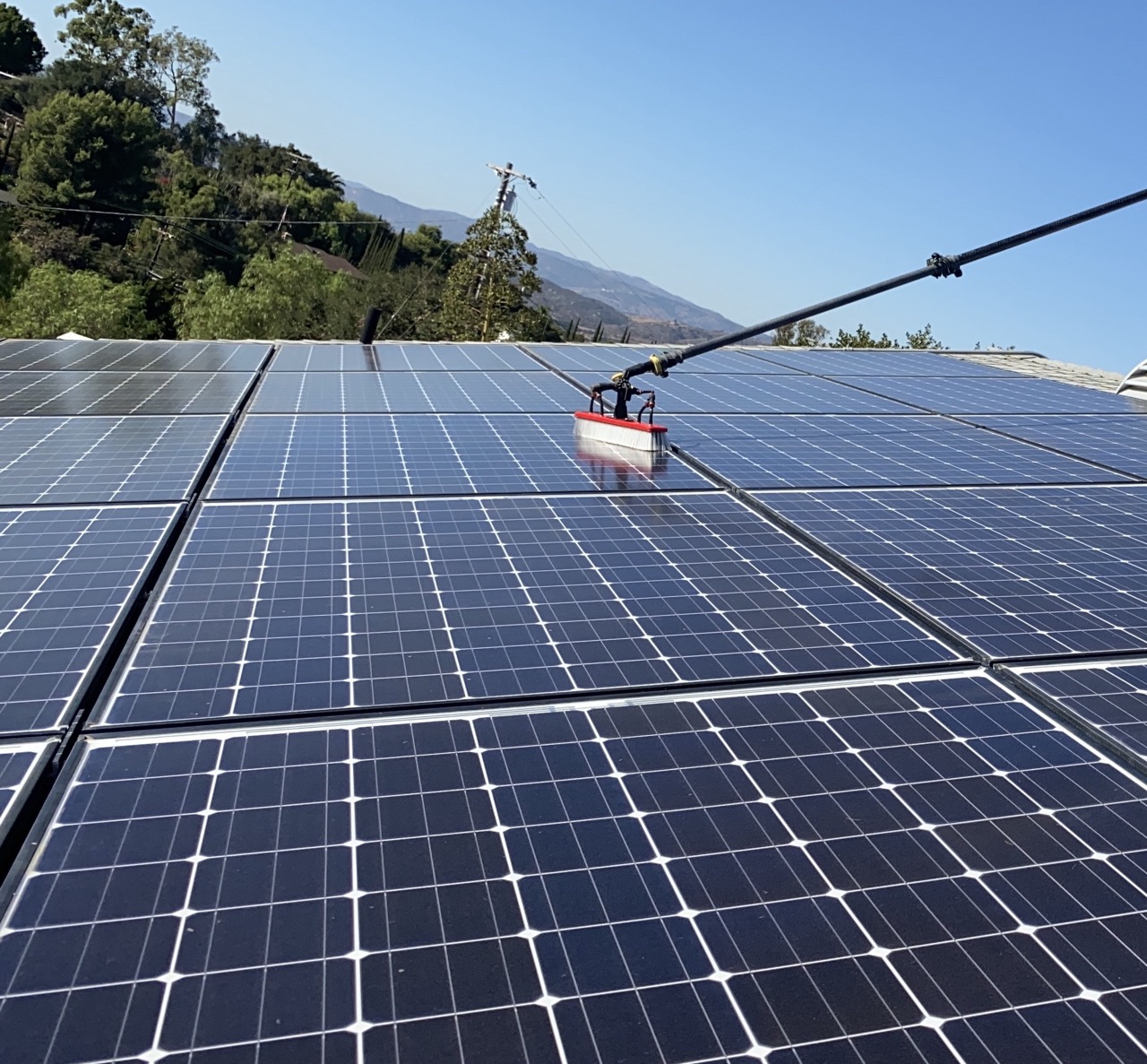
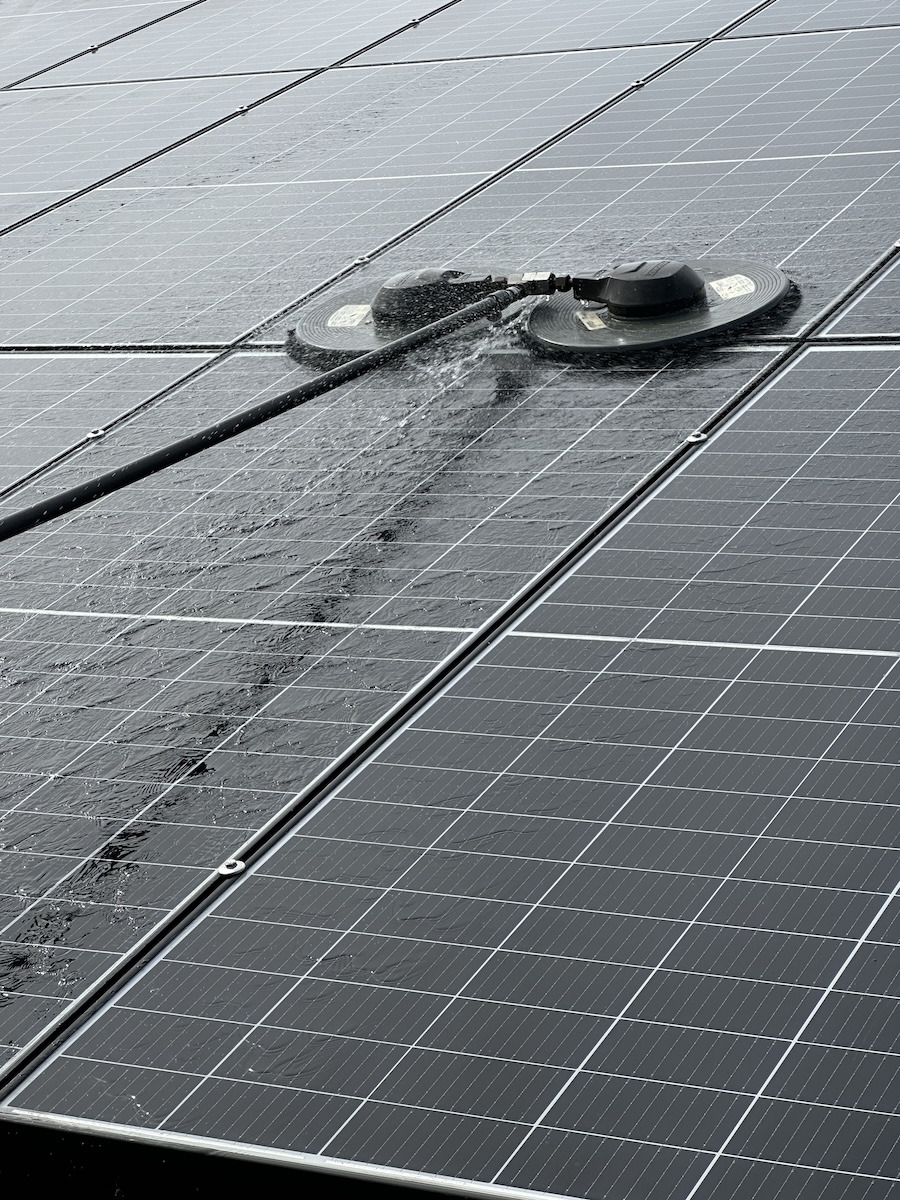
Rotating brush systems are one of the clearest signs of a serious solar cleaning operation. Manufacturers build these systems specifically for solar panel cleaning. They combine agitation, controlled pressure, and water delivery to remove meaningful buildup from panel glass.
A professional rotating brush setup requires real investment. The brush is only one part of the system. A serious contractor also needs pumps, hose reels, hoses, water tanks, and support equipment to run the system properly in the field. These systems cost far more than entry-level tools, and that cost reflects a major difference in capability.
The brush does most of the cleaning work. The rotating action breaks up dust film, stuck-on grime, pollen buildup, bird droppings, and other contamination that rain may leave behind. The operator guides the brush while the tool provides the agitation.
This matters when clients evaluate professional solar panel cleaning. Contractors who use proper rotating brush equipment are usually better prepared for real field conditions. They can address different roof types, array layouts, access challenges, and contamination levels more effectively.
For many residential and commercial projects, rotating brush systems set the practical standard. They are not the only tools in the industry. They are, however, one of the strongest indicators that a contractor has invested in equipment built specifically for solar panel cleaning.
Robotic Solar Panel Cleaning Systems
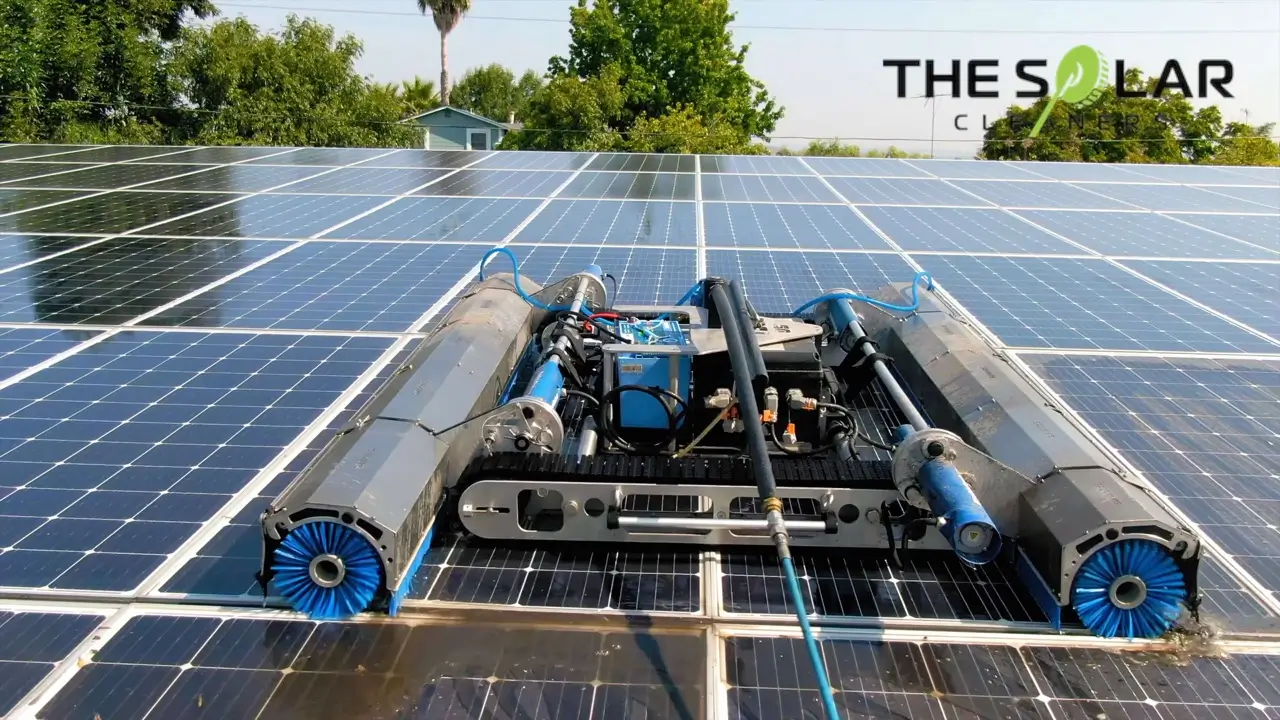
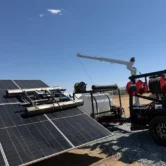
Robotic solar panel cleaning systems, also called remote-controlled cleaning systems, are built for efficiency. These systems improve production, consistency, and workflow on larger solar sites. Manual cleaning takes more labor and more time on those projects.
Most residential contractors do not use robotic solar cleaning equipment. Homes usually do not have the array size, layout, or access conditions that justify it. Contractors use robotic systems more often on solar carports, large ground-mounted systems, and expansive commercial or utility-scale arrays.
These systems can offer major advantages when the site fits the equipment. On large arrays, a robotic brush system can create a more repeatable cleaning process. It can also reduce physical strain on operators and improve workflow across a higher number of modules.
Robotic cleaning systems also have limitations. They do not fit every pitch, slope, or layout. Their value depends on site design, access planning, and array geometry. Like any professional tool, the robot must match the job.
Some utility-scale projects also use brush systems attached to tractors. That is a separate category of solar panel cleaning equipment and deserves its own discussion.
Why the Wrong Equipment Creates Problems
Many people assume that any tool that sprays water onto solar panels is good enough. That assumption is wrong. The wrong equipment can reduce cleaning quality, slow production, increase labor strain, and create inconsistent results across the array.
A system with weak pressure, poor agitation, or slow workable speed may handle very light dust on a small array. It may fail on real buildup across a larger rooftop or commercial project. That is why people should evaluate solar panel cleaning based on equipment, method, site conditions, and operator capability, not price alone.
Clients should ask what type of equipment the contractor actually uses. Contractors should understand that equipment choice directly affects results.
What Property Owners and Clients Should Look For
If you are hiring a solar panel cleaning company, do not judge the service on price alone. The equipment matters. The contractor’s ability to match the method to the array matters too.
- Ask whether the contractor uses purpose-built rotating brush equipment.
- Ask whether the cleaning method changes based on roof type, system layout, and contamination level.
- Ask whether the provider has experience with residential, commercial, carport, or utility-scale systems like yours.
- Ask whether the contractor is equipped for safe access and real production work, not just light rinsing.
- Ask whether the service is approached as maintenance rather than cosmetic washing.
These questions help reveal whether you are hiring a true solar cleaning professional or someone working with entry-level tools.
What Contractors Should Understand
Contractors entering the solar panel cleaning space should take equipment seriously. The industry can look easy to enter from the outside. In practice, there is a major difference between offering a cleaning service and building a professional solar panel cleaning operation.
The right solar panel cleaning equipment affects cleaning performance, credibility, jobsite efficiency, and scalability. Residential work, commercial rooftops, carports, and utility-scale systems all create different demands. Contractors should treat equipment selection as part of the business model, not just a purchasing decision.
Water Fed Pole vs Rotating Brush vs Robot
Here is the simple comparison:
- Water Fed Pole: Lower cost, limited agitation, and best reserved for small or hard-to-reach areas.
- Rotating Brush System: Purpose-built for solar panel cleaning, stronger agitation, better cleaning performance, and a strong fit for many residential and commercial jobs.
- Robotic Cleaning System: Built for efficiency and repeatability on larger solar sites such as carports and ground-mounted arrays.
This comparison makes one point clear. Not all solar panel cleaning equipment belongs in the same category. Each tool has a place, but they do not deliver the same cleaning capability or operational efficiency.
The Bottom Line on Solar Panel Cleaning Equipment
If the goal is to remove real buildup, work efficiently, and clean solar panels professionally, equipment matters. The right tool is not the cheapest option. It is the tool that matches the site, the buildup, and the type of solar system being cleaned.
Water fed poles may still help in certain small or difficult-access situations. For serious solar panel cleaning work, rotating brush systems and robotic brush systems are much stronger indicators of a professional operation.
If you want to learn more about our approach to residential solar panel cleaning, commercial solar panel cleaning, or utility-scale solar cleaning, visit our service pages or explore more resources at The Solar Cleaners.

2 Comments
symptomsexplain
April 26, 2026 at 10:04 amThis guide explained everything clearly.
Thrive crafter
April 27, 2026 at 9:10 amThis guide explained everything clearly.