Utility Scale Solar Cleaning: What Asset Managers and Site Owners Should Know
Utility scale solar cleaning is the professional cleaning of large ground-mounted solar arrays designed to help remove dust, dirt, bird droppings, pollen, ash, and other buildup from photovoltaic modules. On large solar sites, cleaning is not just about appearance. It is about access planning, production support, safety, documentation, and using the right equipment for the size of the project.
For solar farms, ground-mounted arrays, and large commercial energy sites, the cleaning method must be efficient, controlled, and appropriate for the system layout. The Solar Cleaners provides utility scale solar cleaning services for large PV systems throughout California.
What Is Utility Scale Solar Cleaning?
Utility scale solar cleaning refers to cleaning large solar panel installations that are typically ground-mounted and built for energy generation at a larger scale than a standard residential or commercial rooftop system. These systems may include thousands of solar modules arranged in long rows across open land, industrial sites, public facilities, or energy portfolios.
The cleaning process usually involves specialized equipment, trained crews, water logistics, site access coordination, and a cleaning plan based on the type of buildup present on the modules.
Why Utility Scale Solar Panels Get Dirty
Large solar arrays are constantly exposed to environmental conditions. In California, utility scale systems can collect a wide range of contaminants depending on the location, climate, and surrounding property use.
- Dust from dry soil, roads, and grading activity
- Agricultural dust from nearby farms or fields
- Bird droppings from nesting or roosting areas
- Pollen, ash, and wildfire-related debris
- Hard water spotting from irrigation overspray
- Industrial film from nearby operations
- Coastal residue in marine-influenced areas
Some dirt is cosmetic. Other buildup can become heavy enough to interfere with sunlight reaching the solar cells. The difference depends on the amount of buildup, how long it has been on the glass, the panel angle, and the site conditions.
Cosmetic Dirt vs. Meaningful Solar Panel Buildup
Not every dirty-looking panel requires immediate cleaning. Light dust may have limited impact, especially if the system is in an area that receives occasional rainfall. However, meaningful buildup can occur when dust, debris, droppings, ash, or residue begins to form a thicker layer on the module glass.
On utility scale systems, even small losses across a large number of panels can become more significant when viewed across the full array. This is why many asset managers, owners, and maintenance teams evaluate cleaning as part of a broader solar maintenance plan.
Why the Right Cleaning Equipment Matters
Utility scale solar cleaning requires more than a standard water-fed pole. Large arrays often need equipment that can clean consistently across long rows while maintaining controlled contact with the module surface.
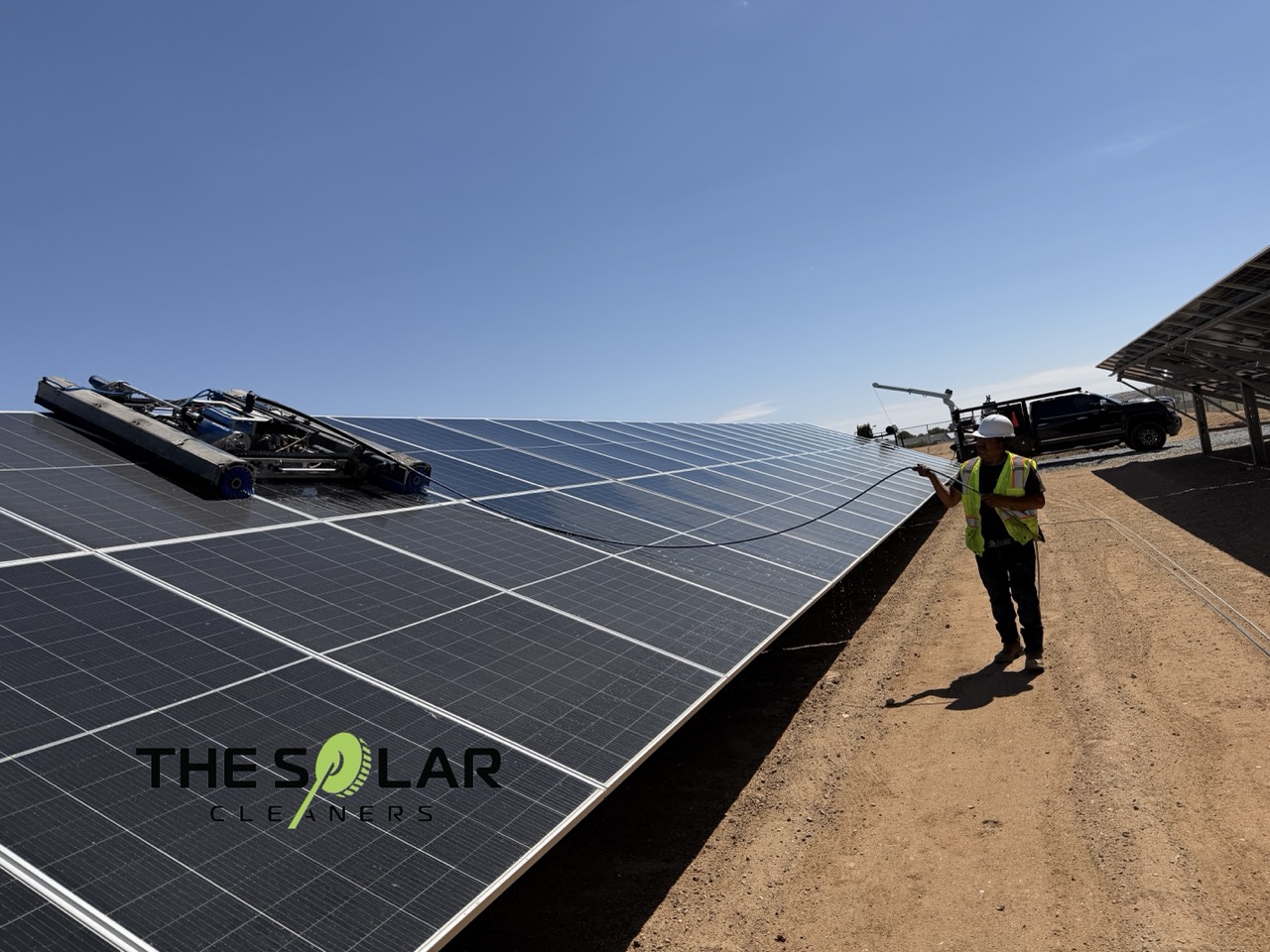
The Solar Cleaners uses professional solar panel cleaning equipment designed for large-format systems, including rotating brush systems and remote-controlled cleaning equipment when site conditions allow. These systems provide agitation and rinse support that can be more effective than water alone on large, dusty, or heavily soiled arrays.
The goal is to remove buildup without using harsh methods, abrasive materials, or uncontrolled pressure against the solar modules.
How Utility Scale Solar Cleaning Is Planned
Cleaning a large solar site requires planning before work begins. The layout, access roads, panel tilt, row spacing, water availability, weather, and site safety requirements all affect the cleaning approach.
Important planning factors include:
- Site access and gate clearance
- Panel layout and row spacing
- Ground conditions for vehicles and equipment
- Water source availability or brought-in water requirements
- Electrical and site safety requirements
- Type and severity of buildup
- Cleaning schedule and production considerations
- Whether the array is fixed-tilt, tracker-mounted, or otherwise configured
These details help determine the best method, crew size, equipment setup, and schedule for the project.
Water Logistics for Large Solar Cleaning Projects
Water planning is one of the most important parts of utility scale solar cleaning. Some sites have usable water access nearby. Other sites require water to be brought in or staged before cleaning begins.
The Solar Cleaners uses specialized filtered water as part of the solar panel cleaning process. This helps support a cleaner rinse and reduces the chance of leaving visible mineral spotting when the panels dry.
For larger projects, water logistics should be reviewed before the service date so the cleaning crew can work efficiently and avoid unnecessary delays.
Safety and Site Coordination
Utility scale solar cleaning is performed around electrical equipment, uneven ground, large rows of modules, and active site operations. A professional cleaning plan should account for safe movement of crews, equipment, hoses, vehicles, and water supply.
Site coordination may include access instructions, security gate details, work hours, staging areas, safety briefings, and communication with the site contact. These details are especially important for utility sites, school districts, municipalities, commercial energy portfolios, and public works projects.
When Should Utility Scale Solar Panels Be Cleaned?
There is no single cleaning schedule that fits every solar site. Cleaning frequency depends on location, weather, soiling level, energy goals, and how quickly buildup returns after service.
Some utility scale systems may only need cleaning once per year. Others may require semiannual, quarterly, or site-specific service intervals depending on local conditions.
Common reasons to schedule utility scale solar cleaning include:
- Visible dust or dirt accumulation across the array
- Bird droppings or localized heavy contamination
- Reduced production that may be related to soiling
- Post-construction dust or nearby grading activity
- Wildfire ash or storm-related debris
- Routine preventive maintenance
- Portfolio maintenance requirements
The first few cleanings can help establish how quickly a site becomes dirty again. After that, a practical cleaning interval can be set based on real field conditions rather than guesswork.
Utility Scale Solar Cleaning vs. Commercial Solar Cleaning
Utility scale solar cleaning and commercial solar panel cleaning are related, but they are not always the same. Commercial solar cleaning often includes rooftop arrays, solar carports, and business properties. Utility scale cleaning usually involves larger ground-mounted systems with longer rows, larger acreage, and more detailed access planning.
Both require professional equipment and safe cleaning methods, but utility scale projects usually involve more logistics, more panels, more water planning, and more coordination with site managers or asset teams.
What The Solar Cleaners Provides
The Solar Cleaners specializes in professional solar panel cleaning for residential, commercial, carport, ground-mounted, and utility scale solar systems. For large solar sites, we design the cleaning approach around the system layout, access conditions, water needs, and level of buildup.
Our utility scale solar cleaning services may include:
- Large ground-mounted solar array cleaning
- Solar farm panel cleaning
- Remote-controlled solar cleaning equipment when appropriate
- Rotating brush solar panel cleaning
- Specialized filtered water cleaning
- Site-specific access and water planning
- Photo documentation when requested or required
- Recurring cleaning schedules for maintenance planning
We also provide public works solar panel cleaning and portfolio-based cleaning services for schools, municipalities, commercial properties, and large energy sites.
Why Professional Cleaning Is Important for Large Solar Arrays
Cleaning thousands of solar panels requires consistency. Improper methods can leave streaking, missed sections, hard water spotting, or unnecessary risk to the system. Professional cleaning helps ensure the work is completed with the right process, equipment, and site coordination.
For asset managers and site owners, the value is not only in the cleaning itself. It is also in having a reliable contractor who understands access, scheduling, documentation, water logistics, and safe handling around PV systems.
Request a Bid for Utility Scale Solar Cleaning
If you manage a solar farm, large ground-mounted array, or multi-site solar portfolio, The Solar Cleaners can help evaluate the site and provide a professional cleaning plan.
Visit our utility scale solar cleaning service page to learn more, or contact The Solar Cleaners to request a bid for your project.
Utility Scale Solar Cleaning FAQs
How often should utility scale solar panels be cleaned?
Utility scale solar panels should be cleaned based on site conditions, soiling level, weather, and production goals. Some sites may need annual cleaning, while others may require more frequent service because of dust, agriculture, birds, ash, or nearby construction.
Can rain clean utility scale solar panels?
Rain may remove some loose dust, but it does not always remove bonded dirt, bird droppings, ash, pollen, or heavier buildup. Rain can also leave uneven residue depending on the site conditions and panel angle.
What equipment is used for utility scale solar cleaning?
Utility scale solar cleaning may involve rotating brush systems, remote-controlled cleaning equipment, water delivery systems, and specialized filtered water. The equipment depends on the array layout, access, slope, spacing, and contamination level.
Is utility scale solar cleaning different from residential solar cleaning?
Yes. Residential solar cleaning usually involves smaller rooftop systems, while utility scale solar cleaning involves large ground-mounted arrays, bigger equipment, water logistics, access planning, and larger crew coordination.
Do you provide documentation after cleaning?
Photo documentation may be provided when requested or when it is part of the service scope. Documentation is often useful during initial service visits, heavily soiled conditions, or portfolio maintenance planning.
Key Takeaway
Utility scale solar cleaning requires more than simply rinsing panels with water. Large solar arrays need the right equipment, water planning, safe access, trained crews, and a cleaning method matched to the site conditions. For solar farms, ground-mounted arrays, and large energy portfolios, professional cleaning can be an important part of long-term solar maintenance.