
What Does Solar Panel Maintenance Actually Involve?
Solar panel maintenance is primarily about monitoring system performance, keeping the panels clean, looking for visible signs of damage, and preventing birds and other animals from nesting beneath the array.
Solar panels have no moving parts, so routine maintenance is generally more about identifying problems early than making frequent repairs.
Homeowners can perform basic monitoring and ground-level visual checks themselves. Cleaning, rooftop inspections and electrical repairs should generally be left to qualified professionals.
Solar panels are designed to operate outdoors for decades, but low maintenance does not mean no maintenance.
Dust, pollen, bird droppings, ash and other contaminants can accumulate on the glass. Birds and rodents can establish nests underneath rooftop arrays. Wiring, conduit, racking and electrical equipment can also develop problems over time.
A simple maintenance routine can help you identify these issues before they become larger and more expensive problems.
Why Solar Panel Maintenance Matters in 2026
For homeowners who already own solar, protecting the performance and useful life of the existing system is increasingly important.
The federal Residential Clean Energy Credit under Section 25D, which previously provided a 30% credit for qualifying residential solar installations, is no longer available for expenditures made after December 31, 2025.
That makes maintaining an existing solar investment even more important.
Regardless of when your system was installed, unnecessary production losses from heavy soiling, equipment problems or animal damage can reduce the value your solar system provides.
Regular monitoring and periodic maintenance can help identify those problems early.
Solar Panel Maintenance Checklist
Here is a practical maintenance schedule homeowners can follow.
Every Month: About Five Minutes
Most monthly checks can be performed without getting on the roof.
- Open your solar monitoring app and review current production.
- Compare production with similar periods from previous years when possible.
- Check for panels, microinverters or system components reporting unusually low or zero production.
- Review your monitoring system for alerts or error messages.
- If your system has an accessible inverter display or indicator, check for warning lights or fault codes.
- Look at the solar array from the ground for obvious dirt, bird droppings, leaves or debris.
- Watch for birds repeatedly entering or exiting from underneath the panels.
- Look for visible nesting material around the perimeter of the array.
Remember that solar production changes naturally throughout the year because of weather, daylight hours, temperature and seasonal sun angles.
A production change does not automatically mean something is wrong.
Seasonally
Certain environmental conditions justify taking a closer look at your solar panels.
After Long Dry or Dusty Periods
Check the surface of the panels for significant dust accumulation, particularly in areas affected by:
- Construction
- Agriculture
- Dirt roads
- Heavy traffic
- Windblown dust
If production appears lower than expected and the panels are visibly dirty, cleaning may be beneficial.
During Pollen Season
Pollen can create a persistent film on solar panels.
Research from the National Renewable Energy Laboratory has shown that rainfall may remove some pollen but may not completely restore panel performance when significant pollen accumulation is present.
After Wildfires or Ash Events
Ash and airborne debris can settle on solar panels after nearby fires.
If a visible layer is present, the panels should be evaluated and cleaned using appropriate methods.
Check for New Shading
Trees and vegetation grow over time.
Look for branches or vegetation that may now shade portions of the solar array during the day.
Tree trimming should be performed safely and without damaging the solar equipment.
At Least Once a Year
The appropriate maintenance frequency depends on the property and environment, but an annual visual review is a good opportunity to assess the overall condition of the system.
Consider checking:
- Overall cleanliness of the solar panels
- Heavy bird-dropping accumulation
- Visible cracks or physical panel damage
- Loose or visibly displaced wiring
- Damaged conduit
- Nesting material beneath the panels
- Condition of existing critter guard
- Visible racking or mounting concerns
- Leaves and debris trapped around the array
Solar panels located in dusty, agricultural, coastal or low-rain environments may require cleaning more frequently.
Properties with heavy bird activity may also require additional attention.
Electrical repairs, testing or modifications should be performed by an appropriately qualified professional.
The Five Main Parts of Solar Panel Maintenance
1. Monitoring: Your Early-Warning System
Your solar monitoring system is one of the most useful maintenance tools available.
Depending on the equipment installed, monitoring may allow you to see:
- Total system production
- Daily and monthly energy generation
- Individual panel or microinverter production
- System alerts
- Inverter faults
- Historical performance
A sudden production loss can indicate an equipment or electrical problem.
A gradual decline can have many possible causes, including soiling, shading, weather conditions or equipment performance.
Whenever possible, compare production with the same period from previous years rather than simply comparing one month with the month immediately before it.
Solar production naturally changes throughout the seasons.
2. Solar Panel Cleaning
Cleaning is one of the most straightforward maintenance services that can be performed on a solar array.
Depending on the location, panels can accumulate:
- Dust
- Pollen
- Bird droppings
- Agricultural debris
- Ash
- Leaves
- Airborne contaminants
Heavy buildup can reduce the amount of sunlight reaching the photovoltaic cells.
How quickly panels become dirty depends heavily on the environment.
Properties near agriculture, construction, highways, dirt roads or areas with substantial bird activity may experience significantly more soiling than other locations.
Rain can remove some loose dirt, but it does not always remove pollen, hardened bird droppings or other stubborn contamination.
How Should Solar Panels Be Cleaned?
Solar panels should be cleaned using methods that minimize the risk of scratching or damaging the glass and surrounding equipment.
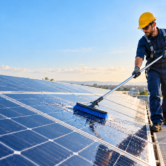
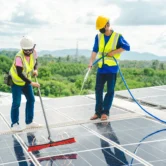
At The Solar Cleaners, we use rotating brushes and filtered water.
We do not use pressure washing or harsh chemicals on solar panels.
Solar panels should never be walked on.
For more information about cleaning frequency, see our guide:
How Often Should Solar Panels Be Cleaned?
3. Inverter and System Monitoring
The inverter or microinverters are critical components of a solar system.
Different inverter technologies have different designs, expected service lives and warranty periods.
Rather than assuming when an inverter will need replacement, homeowners should know:
- What inverter equipment their system uses
- Where system alerts appear
- When the equipment was installed
- When the manufacturer’s warranty expires
Check the monitoring system regularly for faults or alerts.
For equipment with accessible ventilation areas, make sure airflow is not obstructed.
If an inverter reports a fault or stops producing power, contact the solar installer, equipment manufacturer or an appropriately qualified solar professional.
4. Wiring, Conduit and Racking
Solar systems contain wiring, connectors, conduit and mounting equipment that remain exposed to outdoor conditions for many years.
During a visual inspection, look for obvious problems such as:
- Loose or sagging wiring
- Wiring hanging against the roof
- Damaged conduit
- Visible animal damage
- Loose components
- Nesting material interfering with equipment
- Obvious physical damage to racking or mounting components
Do not disconnect connectors, open electrical equipment or attempt electrical repairs unless you are qualified to do so.
If something appears damaged, contact a qualified solar or electrical professional.
5. Bird and Critter Protection
The protected gap beneath a rooftop solar array can attract pigeons and other animals.
Once animals begin nesting underneath an array, they can bring:
- Twigs
- Feathers
- Nesting material
- Food debris
- Droppings
Rodents may also enter the same area and can potentially damage wiring.
One of the most effective ways to prevent recurring access is to install a properly fitted critter guard around the perimeter of the solar array.
A quality system uses durable coated metal mesh that closes the gap between the panels and roof while preserving normal ventilation beneath the array.
No-drill attachment systems are available that secure the mesh to compatible solar panel frames without drilling into the roof or panel frames.
For more information, see our guide:
How to Get Rid of Pigeons Under Solar Panels (and Keep Them Out)
Solar Panel Maintenance: DIY vs. Professional
Some solar maintenance tasks are appropriate for homeowners.
Others should be handled by professionals.
Homeowners Can Typically Handle:
- Reviewing the monitoring app
- Checking production history
- Reviewing system alerts
- Looking at the array from the ground
- Watching for bird activity
- Checking for obvious debris or heavy soiling
- Looking for new shading from trees or vegetation
Consider Hiring a Professional For:
- Rooftop solar panel cleaning
- Nest and debris removal
- Critter guard installation
- Rooftop visual inspections
- Significant bird contamination
- Difficult-access solar arrays
Contact a Qualified Solar or Electrical Professional For:
- Electrical faults
- Damaged wiring
- Failed connectors
- Inverter problems
- Electrical testing
- Equipment replacement
- System modifications
Working on a roof around energized solar equipment creates fall and electrical hazards.
Solar panels can also be damaged by improper cleaning equipment or by walking on them.
How Much Does Solar Panel Maintenance Cost?
There is no single standard maintenance price that applies to every residential solar installation.
Professional cleaning and maintenance costs vary depending on:
- Number of solar panels
- Total array size
- Roof pitch
- Roof height
- Roof material
- Ease of access
- Number of separate arrays
- Amount and type of contamination
- Bird or rodent activity
- Existing critter guard
- Geographic location
A straightforward single-story installation with one compact array may require substantially less labor than a steep two-story roof with panels installed across several roof sections.
For this reason, the most accurate maintenance price comes from evaluating the individual solar installation.
If your solar system is leased or operated under a Power Purchase Agreement (PPA), review your agreement before hiring someone to perform maintenance or make modifications to the system.
Maintenance responsibilities may remain with the system owner or provider.
Frequently Asked Questions About Solar Panel Maintenance
Do Solar Panels Need Maintenance?
Yes, although solar panels generally require relatively little maintenance compared with many mechanical systems.
Homeowners should monitor system production, watch for visible contamination or damage, and have the panels cleaned when necessary.
Wiring, racking, electrical equipment and animal activity should also be evaluated periodically.
How Often Should Solar Panels Be Cleaned?
There is no universal cleaning schedule that works for every solar installation.
Cleaning frequency depends on environmental conditions.
Panels may need more frequent cleaning when exposed to:
- Dust
- Agriculture
- Heavy bird activity
- Pollen
- Ash
- Construction
- Low rainfall
- Other significant airborne contaminants
Monitoring production and visually evaluating the panels can help determine an appropriate cleaning schedule.
What Should Be Included in a Solar Panel Maintenance Checklist?
A good solar panel maintenance checklist should include:
- Monitoring system production
- Checking for alerts or error messages
- Looking for excessive panel soiling
- Watching for bird or rodent activity
- Checking for visible panel damage
- Looking for damaged or displaced wiring and conduit
- Checking existing critter guard
- Watching for new shading
- Keeping track of inverter and equipment warranties
How Often Should the Inverter Be Checked?
Homeowners should regularly review their monitoring system for inverter faults and equipment alerts.
The inverter should also be included whenever the overall solar system is professionally inspected.
Inverter designs and warranties vary significantly between manufacturers, so homeowners should know what equipment they have and when its warranty expires.
Can Rain Clean Solar Panels?
Rain can remove some loose dust and debris, but it should not be assumed to completely clean solar panels.
Bird droppings, pollen and other contamination can remain after rainfall.
Research from the National Renewable Energy Laboratory has specifically shown that rainfall may not completely restore the performance of solar panels affected by significant pollen accumulation.
Professional Solar Panel Maintenance in Southern California
The Solar Cleaners provides professional solar panel cleaning and related maintenance services throughout San Diego County and Southern California.
We service:
- Residential solar systems
- Commercial rooftop systems
- Solar carports
- Ground-mounted systems
- Utility-scale solar installations
- Public works projects
Our solar panel cleaning process uses rotating brushes and filtered water without pressure washing or harsh chemicals.
Depending on the service and property, our work can also include:
- Before-and-after photo documentation
- Pre-clean visual assessment
- Post-clean verification
- Identification and documentation of visible damage
- Removal of accessible nesting material and debris
- Evaluation of existing critter guard
- Installation of no-drill bird and critter guard systems
If we observe an obvious electrical or equipment concern during our work, we can document it so the property owner can have the issue evaluated by an appropriately qualified solar or electrical professional.
To schedule solar panel cleaning or request a maintenance proposal, call The Solar Cleaners at 760-216-2183 or request a bid online.